In the mountainous Sub-counties of Kasese District, water scarcity remains a daily struggle. Many families walk up to 4 kilometers to access the nearest water source — a demanding journey that consumes valuable time and energy, particularly for women and children.
Paradoxically, while water is scarce during dry seasons, heavy rainfall during wet seasons has historically brought destruction. Floods, soil erosion, and damage to crops and homesteads have been common occurrences. The visible scars of degraded land and weakened livelihoods still linger across the hillsides. Communities have long been caught between two extremes: prolonged water shortages and rain-induced disasters.
In 2025, CODEA with support from the Foundation for Community Development and Empowerment, supported communities in Bikone and Isule parishes of Maliba sub-county to install rainwater harvesting systems as a climate adaptation strategy.
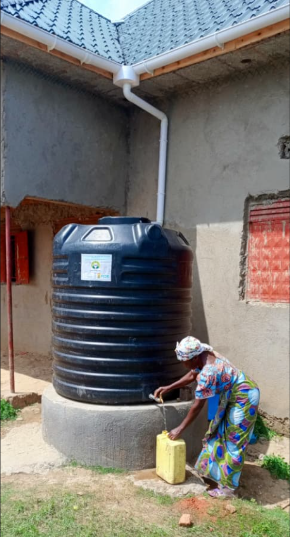
Additional twenty-five rainwater harvesting tanks have been installed in water-stressed and disaster-affected households and institutions, delivering dual benefits for both people and the environment. Through rooftop rainwater harvesting, households can capture and safely store rainwater, reduce rooftop runoff, minimize soil erosion around homesteads, and secure water for domestic use, sanitation, and small-scale food production.
“Rain is increasingly viewed as a blessing rather than a threat,” says Musoki Leah, a 65-year-old grandmother caring for her grandchildren. “In the past, when the clouds gathered, I would worry—about the long walks, about whether we would have enough water. But now, my household and even our neighbors no longer struggle every day to find water. Like many families here, I no longer fear heavy rainfall, and I don’t have to walk those exhausting 4 kilometers to fetch water. When it rains now, I feel at peace, because I know it is helping us, not hurting us."
Access to clean water closer to home improves household hygiene, protects homes from erosion, and sustains kitchen gardens during dry spells. This intervention strengthens resilience and restores dignity among vulnerable families.
While progress is significant, the need remains urgent. Although the installed tanks have transformed lives, many households in the mountainous communities of Kasese still walk long distances searching for clean water. Scaling up rainwater harvesting efforts is essential to fully restore resilience, safeguard livelihoods, and ensure that every drop of rain becomes an opportunity for growth rather than a trigger for disaster. END